


Florida workers' compensation

Your own workers' comp policy — not a PEO lease on your payroll

A PEO bundles your comp into a leased-employee arrangement you don't control. A direct policy stays in your business name, builds your own experience history, and can be shopped every renewal. Richard Williams Agency is an independent agency — we quote the carriers, not a single program.

Construction crew framing a roof on a Central Florida job site

NPN #597029

Licensed Florida insurance agent

nearly three decades of experience

Industry experience behind every quote

Independent agency

Not tied to one carrier or one program

Carrier partners

Carrier appointments are being finalized.

Coming Soon

Talk to the agent directly

Same office, same agent, from quote through renewal and certificates.

Richard Williams Agency39865 US Highway 27Davenport, FL 33837(863) 940-9062info@compquotedirect.com

Who needs workers' comp in Florida

Florida sets the requirement by industry, not by business size alone. Construction employers are covered from the very first employee.

IndustryCoverage required at
Non-construction4 or more employeesFull-time or part-time, counted together. Corporate officers and LLC members count unless properly exempted.
Construction1 or more employeesCoverage is required from the first employee, including most subcontractors working without their own policy.
Agriculture6 or more regular employeesOr 12 or more seasonal workers employed for more than 30 days in a season.

What it costs by trade

Florida workers' comp is priced by NCCI class code. These statewide rates are the starting point — your payroll, experience mod, and carrier credits set the final number.

Class codeDescriptionRate per $100 payroll
9586Barber, Beauty Parlor, Hair Salon$0.43
9012Property Management — Managers$0.61
8015Quick Printing / Copy Shop$0.68
8008Clothing / Apparel Store$1.05
9082Restaurant NOC$1.16
8017Retail Store NOC$1.18
9083Restaurant — Fast Food$1.20
8006Gas Station with Grocery$1.54
9052Hotel — All Employees$1.56
8380Auto Service or Repair Center$1.67
7605Burglar / Fire Alarm Installation$2.12
5478Floor Covering Installation$2.12
9014Janitorial / Cleaning Services$2.45
9102Lawn Maintenance$2.53
5183Plumbing NOC$2.74
5190Electrical Wiring — Within Buildings$2.97
5537HVAC Installation, Service & Repair$3.00
6217Excavation$3.27
5221Concrete — Floors, Driveways, Yards$3.87
0042Landscape Gardening$4.14
5403Carpentry NOC$4.36
5474Painting NOC$4.48
5437Carpentry — Cabinet / Interior Trim$4.57
5102Door & Window Installation$4.78
5022Masonry NOC$5.22
5645Carpentry — Residential (1-2 Family)$7.69

2026 Florida NCCI statewide rates. Every policy also includes a $160 expense constant. Rates don't vary by county — carrier credits/debits and your experience mod adjust the final premium.

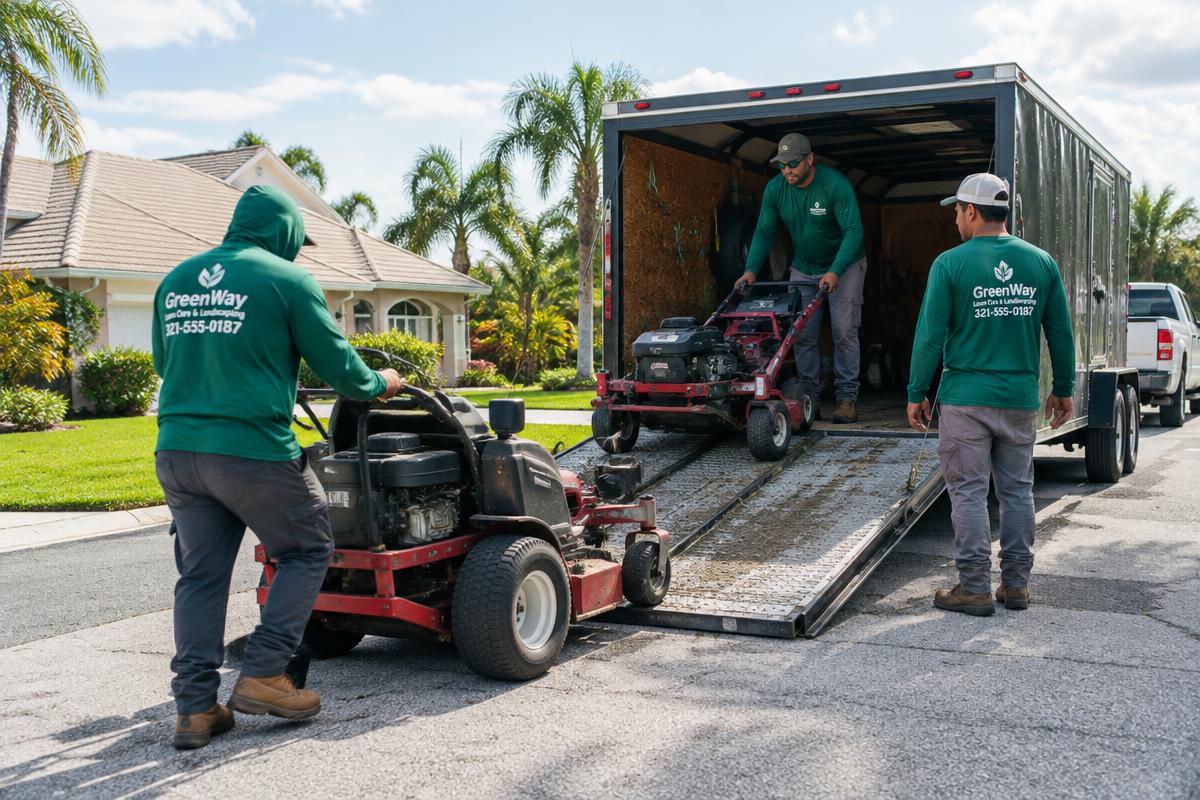
Lawn care crew loading mowers onto a trailer in Central Florida
Landscaping & lawn care
HVAC technician servicing an air conditioning condenser at a Florida home
HVAC & mechanical
Kitchen staff working the line in a local Florida restaurant
Restaurant & food service

PEO vs. a direct policy

Under a PEO, your employees are co-employed and your comp coverage sits inside the PEO's master policy. You get one bundled invoice, but you don't own the policy, you don't build your own loss history, and leaving usually means starting over with no experience credit of your own.

A direct policy is issued to your business. You keep your own class codes, your own experience modifier, your own certificates, and the ability to re-shop each renewal.

See the full comparison

Where a direct policy usually wins

  • You keep your own experience modifier and the credit that comes with it.
  • Payroll, HR, and insurance stay unbundled, so each can be priced on its own.
  • Certificates of insurance come from your own policy, in your own name.
  • Renewals can be shopped across carriers instead of accepting one program's rate.

How your premium is calculated

Workers' comp pricing is unusually transparent — it is arithmetic, not a black box.

1

Payroll per $100

Take your annual payroll for each class code and divide it by 100. Comp is rated per $100 of payroll, not per employee.

2

× class code rate

Each trade has its own published rate. A roofer and the office bookkeeper at the same company are rated very differently.

3

× experience modifier

Your own claim history adjusts the result up or down. A clean history earns credit; a loss-heavy history costs more.

Full formula: expense constant + (payroll ÷ 100 × class rate × experience modifier), then carrier credits or debits. Because payroll drives the number, an accurate payroll split by trade is the single biggest lever on your premium.

What an injury actually costs

Three common Central Florida claims, and why they add up fast.

Scenario 1

Landscaping, Polk County

A landscaping crew member in Polk County strains his back lifting a commercial mower onto a trailer at the end of a hot afternoon. He's out of work for physical therapy and light duty for several weeks. Strains and overexertion injuries are among the most common workers' comp claims in landscaping and grounds-keeping work, and they add up fast once medical care and lost wages are combined.

Scenario 2

Residential Framing, Polk County

A framing crew working a new-build in the Davenport/Haines City area has a carpenter fall from a ladder while setting trusses. Falls are one of the most serious and most expensive categories of construction claims, often involving surgery, extended recovery, and a longer return-to-work timeline than a strain or sprain.

Scenario 3

Restaurant, Orange County

A line cook at an Orlando-area restaurant slips on a wet kitchen floor during a dinner rush and fractures a wrist. Between the ER visit, follow-up care, and time away from the line, a single slip-and-fall claim can cost far more than a year of premiums for a small restaurant.

Why use an independent agent

A captive agent can only offer what one company sells. An independent agent starts with your business — your trades, your payroll split, your claim history — and then looks for the market that fits it.

That independence matters most at renewal, when the question is whether your current rate is still competitive. There is no incentive to defend a single program.

  • Class codes reviewed for accuracy — misclassified payroll is a common overcharge.
  • Audit preparation, so your year-end payroll audit doesn't produce a surprise bill.
  • Certificates of insurance issued for your general contractors and clients.
  • A direct line to the agent who wrote the policy, not a call center queue.

Florida workers' comp FAQ

Get a direct Florida workers' comp quote

Answer a few questions about your business and payroll. An independent agent reviews it — no PEO lease, no payroll bundling.